
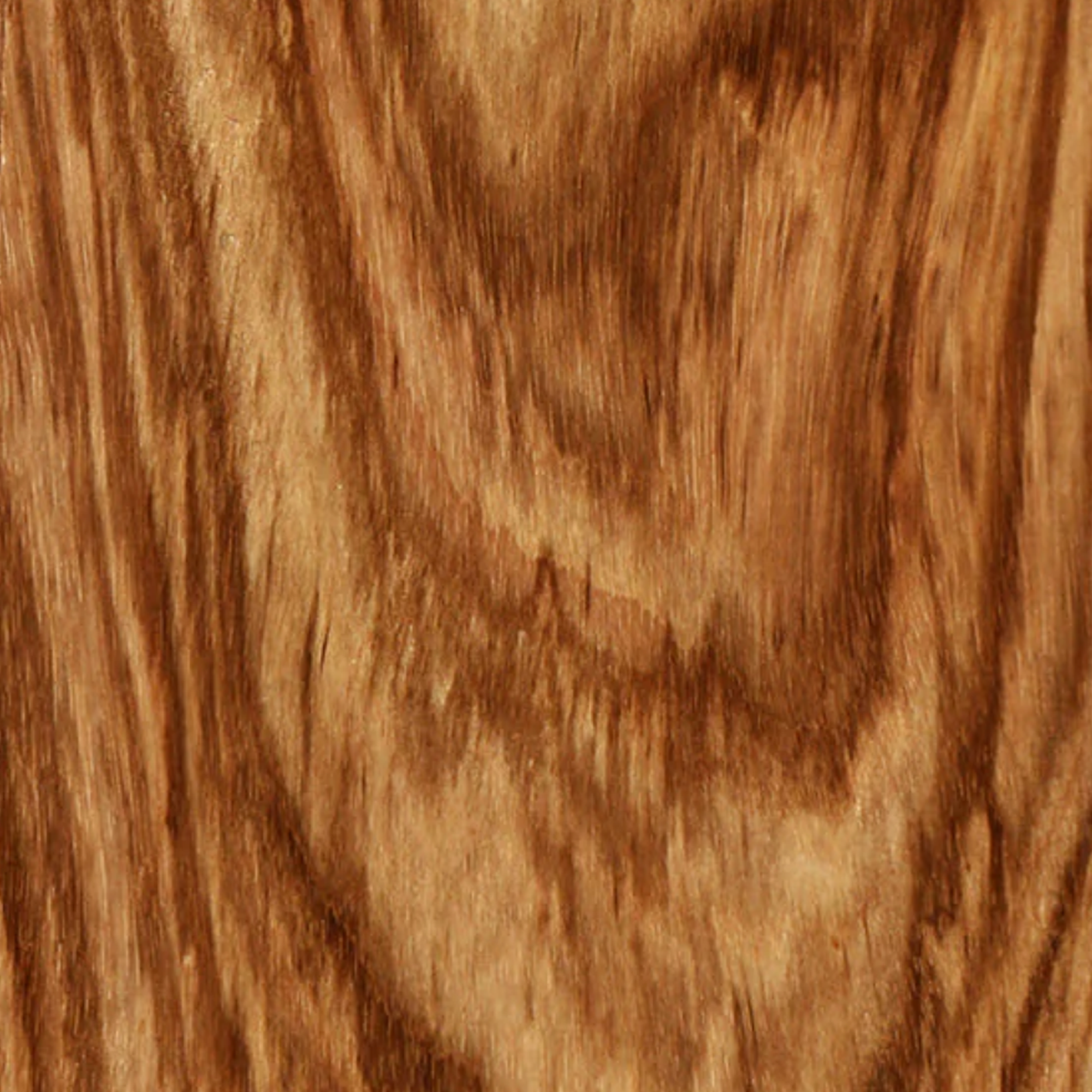
BELI
Pronounced beh-LEE (/bɛˈliː/)
SIZES IN STOCK
4/4
GENERAL DESCRIPTION
This wood has a light brown center (heartwood) that usually features darker stripes running through it. If the wood is cut a certain way (quartersawn), those stripes look a lot like Zebrawood. The outer layer (sapwood) is a wide, pale yellow section. It stands out clearly because it doesn’t have any of those dark stripes found in the center.
WORKING PROPERTIES
It is generally easy to work with by hand or with machines. However, if the grain is "interlocked" (twisting together), the wood might tear or chip during cutting. One thing to watch out for is that Beli is unstable; it tends to shrink or swell quite a bit as humidity changes. You also shouldn't use iron or steel screws/hardware with it, as the wood reacts with those metals to create dark stains. On the plus side, it takes glue and finishes very well.
PHYSICAL PROPERTIES
The grain usually twists together in an interlocked pattern, giving the wood a texture that feels slightly coarse but consistent. It has a subtle, natural shine to it. When looking at a cross-cut of the wood, you'll see a few very large pores scattered around without a specific pattern, and you might occasionally find small mineral or "gum" deposits in the center. As far as durability goes, the wood is decently tough; it’s rated to hold up okay against both rot and insect attacks..
MAIN USES
Cabinetry, veneer, flooring, and interior millwork
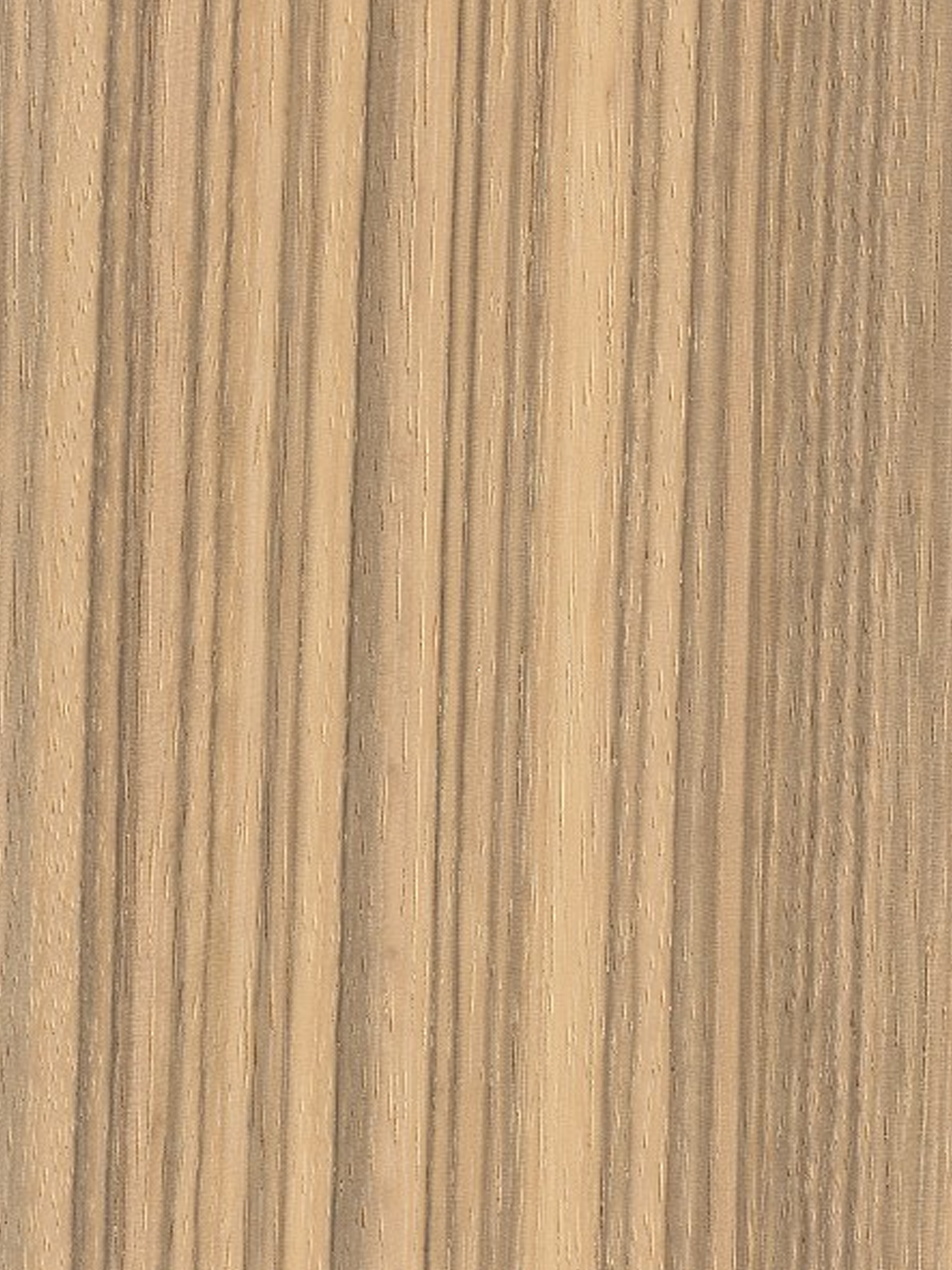
Beli when it’s quarter sawn